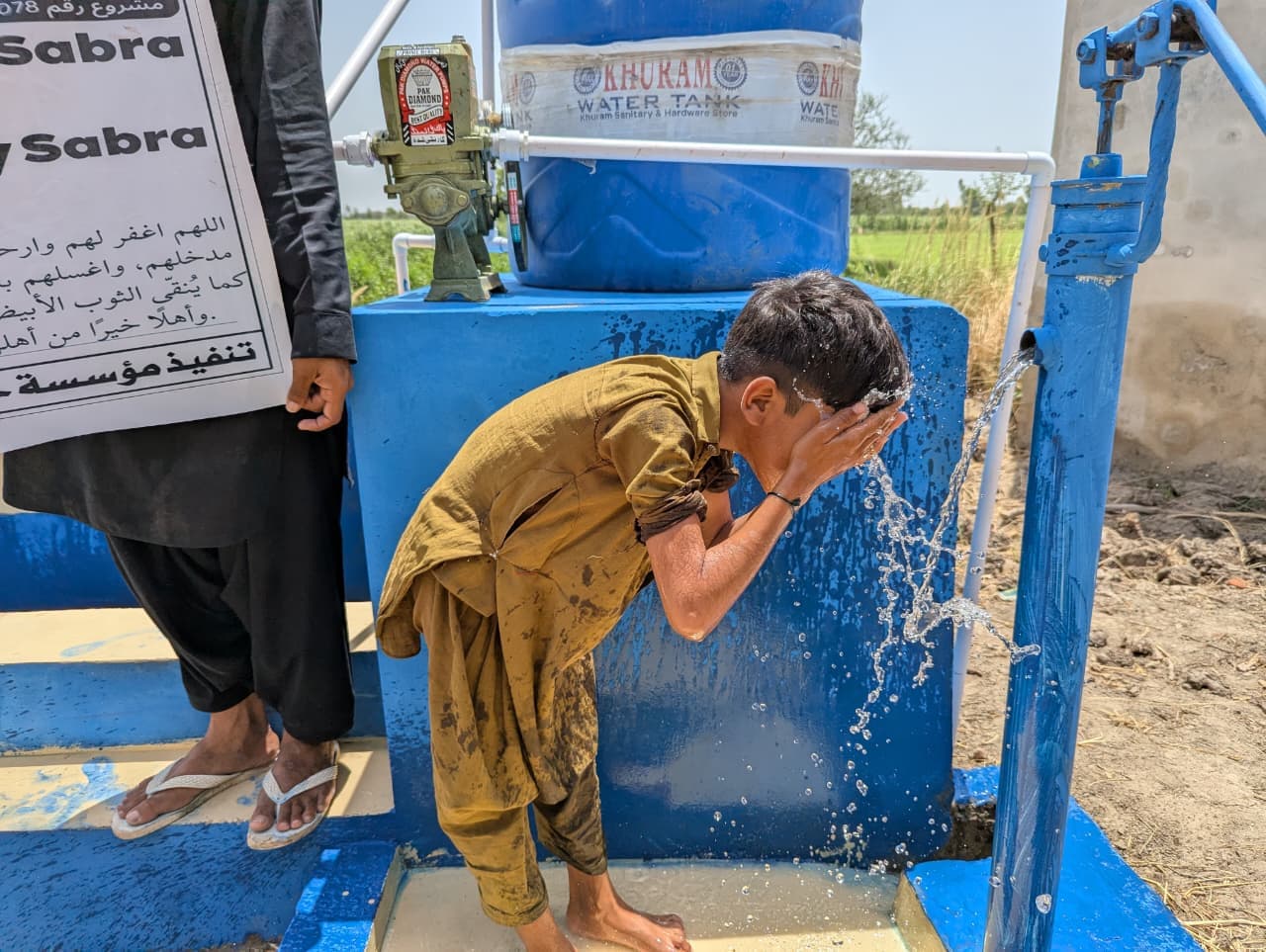

Well maintenance: How does a well project last for years?
The opening day of the well is a beautiful day: flowing water, the people of the area around it, and a prayer in the name of its owner. But this day is not the end of the project, but rather its beginning. A well that is not maintained may stop after a few years, and with it the benefit for which it was dug.
That's why you count Well maintenance The other half of the project. In this guide we clearly explain: why wells stop, what faults actually occur in each type of well and how to treat them, how to perform regular maintenance, and how to choose a well that will last for years.
The information here is taken from the field team's experience in Digging wells and watering water: ongoing charity in your name.
Article summary:-
This article explains how well maintenance ensures the continuity of the well project after its implementation. It presents the common malfunctions in each type of well and the method of treating each malfunction, from rusting of the pump and cracking of the floor in the surface well, to malfunctions of the faucets, tank, well body, and ablution seats in artesian wells, and explains how the well is built from the beginning to last, and how to choose the appropriate type.
Regular maintenance is included every 6 months within the project price, with inspection tours of all wells to ensure they continue to operate efficiently in Pakistan, India, Nepal and Bangladesh. The life span of a well ranges from about 10 years for a surface well to more than 50 years for a deep artesian well. The more components the well has, the more maintenance points that need to be followed up.
1. Why do wells stop? Why is maintaining wells half the project?
Many people think that if the well is dug and water comes out, the matter is over. The reality is completely different.
What the data says
In Review of hand pump data Published by IRC in 2019, it was found that About one in four hand pumps in sub-Saharan Africa is not working at any given time.
This means that digging a well alone is not enough. A well left after its opening risks becoming a mere structure without water.
Why does this matter to you as a well owner?
The Messenger of God, peace and blessings be upon him, said: “And the most beloved of deeds are those that are always devoted to God, even if they are few” (Sahih Al-Bukhari, 6464).
The well is an ongoing charity as long as people benefit from it. Every day that the well works is a new day of benefit, and every day that it stops is a lost day of this benefit. So the Well maintenance It is not an additional service, but rather what keeps the project itself going.
The difference between a well that is maintained and a well that is abandoned
| A well left after opening | A well that is being maintained | |
|---|---|---|
| Small malfunctions | It accumulates until the well stops | It is treated on time |
| The age of the well | Shorter than expected | It is approaching its expected lifespan |
| Benefit | It breaks | It continues |
So what's actually broken down in the well? The answer varies depending on the type of well, and the more components it has, the more follow-up points.
2. Common well faults and their treatment according to the type of well
These are the faults that the field team actually encounters in the permeable wells, and the method of treating each of them:
| Holidays | Treatment method | Surface well | Medium artesian | Deep artesian |
|---|---|---|---|---|
| Pump rusted | Repainted | ✓ | ✓ | ✓ |
| The well floor cracked | Adding a new cement layer | ✓ | ✓ | ✓ |
| Faucet malfunction | Replace it | ✓ | ✓ | |
| Malfunction in the tank connection pipes | Maintained and replaced if necessary | ✓ | ✓ | |
| Tank leak | Maintain it and close the holes | ✓ | ✓ | |
| Cracked well body | Maintain it | ✓ | ||
| Broken ablution seats | Restoration | ✓ |
Surface well with hand pump: two maintenance points
Surface well It is the simplest in configuration, so its malfunctions are limited:
- Hand pump rust: Treats by repainting the pump.
- Well floor cracking: Treated by adding a new cement layer.
Medium artesian well: five maintenance points
Medium artesian well Adds to the pump and floor Faucets, connecting pipes and a tankThe follow-up points increase:
- Pump rust: repaint.
- Floor cracks: new cement layer.
- Faucets malfunction: replace them.
- Malfunction of the tank connection pipes: maintain them, or replace them if necessary.
- Tank leakage: maintaining it and closing holes.
Example of documented wells: Project No. 1109 In the Ghotki region of Pakistan, a medium artesian well with a depth of 60 meters was implemented in May 2026 and is operated by an electric and manual pump. And just like him, his follow-up includes these five points.
Deep artesian well: seven maintenance points
Deep artesian well It is implemented next to a mosque or school, so he adds A larger well body and seats for ablution. In addition to the previous five points, its maintenance includes:
- Cracked well body: maintenance.
- Broken ablution seats: restoration.
What do you notice about this list?
- All of the mentioned malfunctions are malfunctions in the visible components of the well: Paint, cement, faucets, pipes, and tank.
- They are all treatable With an obvious procedure: paint, cement, replace a part, or seal a leak.
- The larger the well, the more components it containsMaintenance points that need regular follow-up have increased.
I knew what was broken and how to fix it. The most important question remains: When is this maintenance done? Who bears the cost?
3. Regular maintenance every 6 months: How does follow-up continue after delivery?
Fixed cycle, not on demand only
Hyatt is committed toRegular maintenance every 6 months For every well you implement, along with Inspection tours of all wells To ensure it continues to operate efficiently. This applies to wells in all countries where Hayat operates: Pakistan, andIndia, andNepal, andBangladesh.
Why every 6 months specifically?
Because the regular cycle allows the fault to be dealt with while it is small: rust that is painted over before it damages the pump, a crack in the floor that is covered with a layer of cement before it expands, and a leak in the tank that is closed before the water is lost.
Who pays the maintenance cost?
Regular maintenance every 6 months is included in the well price. It is not paid again after the agreement, nor is it sold to you later as a separate service. It is part of the pledge that you receive with the endowment certificate when the well is delivered.
Maintenance points in one line for each type
| Well type | Number of maintenance points | What it includes |
|---|---|---|
| Surface with hand pump | 2 | Pump, floor |
| Medium artesian | 5 | Pump, floor, faucets, connecting pipes, tank |
| Deep artesian | 7 | All of the above, the body of the well, the ablution seats |
But maintenance does not start only after delivery. A large part of it begins on the day of construction itself, with the way the well is implemented.
4. Maintenance starts from the day of construction: How is a well built to last?
A well that is well built from the beginning is best maintained. In the implementation stages, there are steps whose direct goal is to make the well live longer:
1. Clean water first
If there is no water at the excavation site, or if there is water that is not suitable for drinking, the excavation is repeated Elsewhere within the same area Until access to clean water. A well based on a valid source from the beginning is the foundation of any continuation.
2. The insulating cement layer
Of the construction stages Adding an insulating cement layer. It is the same layer that is renewed later in maintenance when the floor cracks, so protection of the well begins from the day it was built.
3. Fix the plate with cement
The marble plaque is in the name of the owner of the well Fixed with cement Do not hang, so that it remains stable on the well throughout its life.
4. Paint
Paint An independent stage in implementation. This protects the metal from rust, which is why the first treatment for pump rust later is Repainting.
5. Optional add-on to extend life
can be requested Add ceramic to the well As an optional extra separate from the price, it helps extend the life of the well.
All of these stages appear before you in the final video of the project, as we explained in the guide Documentation of well projects.
The well is well built and maintained every 6 months. One decision remains in your hands before starting: Which well do you choose if continuing the project is what matters first to you?
5. How do you choose a well that will last for years?
Life span of each type
| Well type | Shelf life | Maintenance points |
|---|---|---|
| Surface with hand pump | About 10 years | 2 |
| Medium artesian | From 15 to 20 years | 5 |
| Deep artesian | More than 50 years | 7 |
The equation is simple
- Surface well Simpler to set up and maintain, and has a shorter lifespan.
- Deep artesian well More components and follow-up points, but longer lasting by a wide margin.
- Medium artesian well It falls between them in age and number of maintenance points.
In all types, regular maintenance is included in the price, so you do not bear the cost of additional components after the agreement. To compare prices in detail, read our guide The cost of drilling a well.
5 questions about maintenance before you contract with any party
- Is there regular maintenance after delivery? And how many months?
- Is maintenance included in the price, or is it paid later?
- What malfunctions are covered for maintenance in the type of well you choose?
- Are there regular inspection tours of the wells?
- Is the well built with insulation and paint to protect it from the beginning?
If any party's answer to these questions is not clear, the continuation of the well is not guaranteed. If you want detailed answers about any well before you decide, Contact us.
Frequently asked questions about well maintenance
Does the well need maintenance after drilling?
Yes. The well needs regular maintenance in order to continue working, because its components such as the pump, floor, faucets, and tank may malfunction over time.
Every how many months are wells maintained?
Regular maintenance is carried out every 6 months, with inspection tours of all wells to ensure they continue to operate efficiently.
Is well maintenance included in the price?
Yes. Regular maintenance every 6 months is part of the well price, and there are no additional expenses after the agreement.
What are the most common well failures?
The pump rusts and the floor of the well cracks in all types. In addition, in artesian wells, there are failures of faucets and connection pipes and leakage of the tank. In a deep well, the body of the well cracks and the ablution seats are broken.
How to treat well pump rust?
Repaint the pump.
What happens if the well floor cracks?
A new cement layer is added to repair it.
How long does a well live with maintenance?
About 10 years for a shallow well, 15 to 20 years for a medium artesian, and more than 50 years for a deep artesian.
Is there an addition that extends the life of the well?
Yes, ceramic addition to the well can be ordered as an optional addition separate from the price, and it helps extend its life.
Which type of well is easier to maintain?
The surface well is equipped with a manual pump, because it has only two maintenance points: the pump and the ground. But its life is shorter than artesian wells.
A project that does not end the day it opens
A well that is drilled and then abandoned may stop after a few years. As for the well that is built with an insulating layer and paint, and is monitored every 6 months, and its minor faults are treated, it is the well that continues to provide people with water for many years. This is the meaning Well maintenance: That the project continues as it began.
If you want a well that will last after it is opened, choose its type from Well projects, or Contact us Let us explain to you the maintenance plan before you start.
A well that is maintained, and a reward that does not stop.