
The story of the Hayat Foundation: How did we start and why did we choose clarity?
Didn't start The story of Hayat Foundation From a project idea, but rather from a question for which we did not find a comfortable answer: What happens after people pay?
Article summary:-
This article tells how the Hayat Foundation was created: years of field work, direct contact with less fortunate communities, a close vision of the extent of the need, and noticing challenges and errors in some traditional business models, especially in transparency, project implementation mechanisms, and clarity of what happens after the project value is paid. Then how did that observation turn into a different business model, and why water saving became one of our most important areas.
Conclusion: Hayat was founded to address a problem in the way we work, not to add a new entity to the list. The promise on which it is built is to know the customer Where His project is implemented, andHow It is implemented, andWhat are its stages?, andWhat has been achieved on the ground?.
1. The beginning: a gap that we saw with our own eyes
What did we see in the field?
Through years of fieldwork and direct contact with less fortunate communities, we have seen firsthand the scale of the need. And we saw something else with him: Challenges and errors in some traditional business models, especially with regard to transparency, project implementation mechanisms, and clarity of what happens after the project value is paid.
The gap that is difficult for us to see
It was difficult to see this gap between What is offered to people And what actually arrives To communities in need. So we decided to look for a different way.
Hence, the Hayat Foundation was established
The idea was not to add a new name to a long list, but to address the problem we saw in the same way. Our 5 years of experience in the field made the problem clear to us before we started.
The problem became clear. What was the solution?
2. The model we chose: to know the customer
Four questions that the client must find answers to
Hayat came to be a clearer and more transparent model in implementing development and social projects. A model where the customer knows:
- Where The project is being implemented.
- How Implemented.
- What are its stages?.
- What has been accomplished? On the ground.
How do these questions translate into practice?
"Where" It means a specific location, not a general description, and an explanation of the project from the beginning Digging a well is an ongoing charity. **“How”** means announced implementation stages with prices and types, as in The cost of drilling a well is an ongoing charity. **“What has been accomplished”** means a documentation file that reaches the project owner, detailed in: How are well projects documented? And its models are in Documentation page.
Post-order chain
Clarity is not a slogan, but rather an arrangement: the site is determined, then implementation begins in stages, updates arrive from the work site one by one, and then the project owner receives the documentation file after completion. Every link in this chain can be asked about and reviewed, and this is the difference upon which the institution was founded.
Why was “post-payment” the starting point?
Because it is the moment when the interest of many ends, and our responsibility begins. What happens after the request is completed is the real difference between a promise and a project.
The promise is clear. But what is its purpose?
3. The goal: a relationship, not a deal
Our goal was not just to implement projects
Rather, building a relationship based on Trust, clarity and credibility, transforming every project from just Request or number To A real impact that can be seen and documented.
How does a number turn into a trace?
When the project has a number in a register, pictures of its location, coordinates that open on the map, and a plaque bearing the name requested by its owner. Then it stops being a line on an invoice. And whoever wants to see this in one complete experience,...The story of a client who implemented nine wells You tell it from the first question to the last project.
Trust is tested and not claimed
That is why we have published criteria by which the reader can examine any party, including us, in How to choose a reliable organization to drill a well in your name. The party that is confident in its work will give you the tools to examine it in your hand.
This is the way. So where did the projects go?
4. Why is water in the forefront?
The communities we have reached
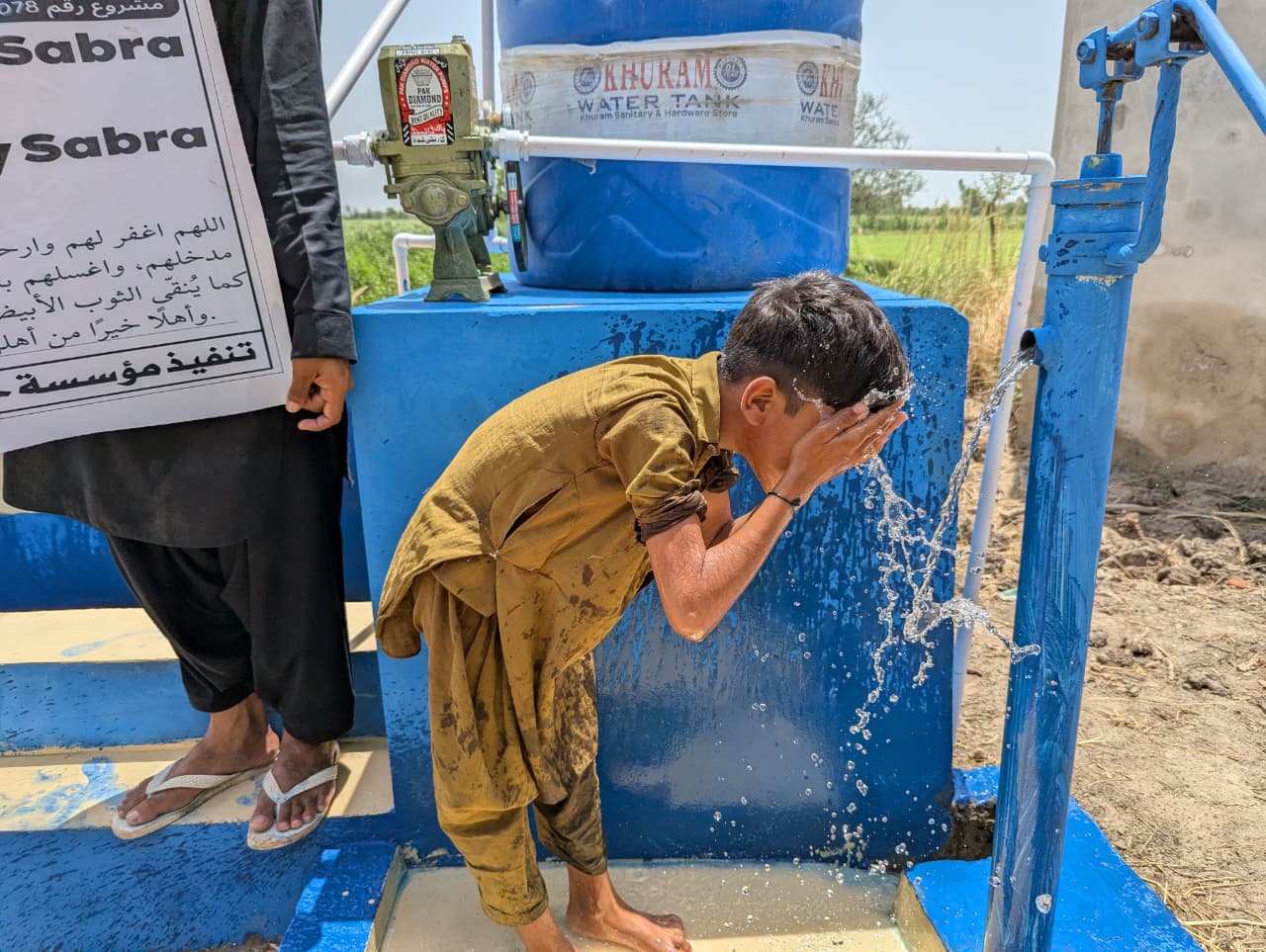
Over time, Hayat's projects expanded to reach communities suffering from Difficult conditions and severe shortage of basic resources. There we discovered that access to clean water is important for many families More than just a daily need, but an essential part of their survival and life.
The world number says the same thing
indicate World Health Organization Until 296 million people They take their water from unprotected wells and springs, and115 million They collect it from untreated surface water in lakes, ponds and rivers. The issue is neither luxury nor improving the standard of living.
Hence, saving water has become one of the most important areas of our work
In addition to a group of other development and social projects. Water projects of all kinds in Projects page And compare it in Water irrigation projectsAnd the sacrifices in Sacrifice page AndAqeeqah guide AndA charity sacrifice.
Why is the project not finished when it is delivered?
Because a well that stops is of no benefit to anyone, follow-up and maintenance are part of the responsibility, not an additional service, and its details are in Well maintenance.
We started with an idea. So where are we today?
5. From an idea to an ongoing responsibility
What has changed and what remains
What started as an idea to address a problem in the way we work, is what it is today A responsibility we continue to carry: To get projects to those who need them, and to be everything we do Clear, documented and traceable.
How do you check this yourself?
Don't believe what's on this page. Open Monthly reports And read the numbers and implementation areas month by month, e.g May 2026 reportThen compare it with what is written here. A promise that is not matched by a published number is still a promise.
Three things we refrain from saying
Part of clarity is knowing the limits of what we can confirm:
- We do not promise a guaranteed result. We implement a project and document it, and the results afterwards are no one's property.
- We do not publish numbers without reservation. When we write the number of beneficiaries, we write with it that it is Estimated capacity for projects, not a unique count of people.
- We don't fill a void with unconfirmed information. Unless we receive its number or details, it remains blank in our reports until it arrives.
Refraining from saying what we do not have evidence for is part of transparency, and there is no shortage of it.
The sentence upon which the institution was built
This is life: a foundation built on the conviction that... Real impact starts with trustAnd that Trust is not built by words, but by transparency and action that can be seen on the ground.
Frequently asked questions
What is the story of Hayat Foundation in brief? It started from a gap that we saw between what is provided to people and what actually reaches communities, so it was established to provide a model in which the client knows where his project is being implemented, how, and what has been achieved from it.
Why was the Hayat Foundation established? To address a problem with the way things work itself: the lack of transparency, implementation mechanisms, and the ambiguity of what happens after the project is paid for.
What distinguishes your business model? The client should know four things: where the project is being implemented, how, what its stages are, and what has been accomplished on the ground.
What is your experience in this field? 5 years of field work experience and direct contact with less fortunate communities.
Why do you focus on water? Because in the communities where we work, clean water is part of families' survival, not just a daily need.
Do you implement projects other than water? Yes, water provision is one of the most important areas of our work, along with a group of other development and social projects and sacrifices.
How do I make sure that my project is actually implemented? With the documentation file you receive, and the monthly reports published for each month.
What does “an impact that can be seen and documented” mean? The project turns from a request or number into a specific location, pictures, video, and a sign bearing the name you requested.
Do you work in specific countries? We implement in a number of countries, and the customer chooses the country when completing his order, and the regions of each month are published in the monthly report.
What do I receive after the project is completed? A documentation file includes photos from the site, a video clip, and a plaque with the name you requested. The wells have geographic coordinates that you open yourself.
How do I start a project with you? Choose what suits you Well projects Or Sacrifice pageAnd complete the request via Payment methods.
Make your project part of this story
The story of Hayat Foundation It did not start with a number, and it is not measured by it alone. It is measured by what every project owner can see with his own eyes.
Start from Well projects Or Sacrifice pageAnd read Who are we? To know the entity behind the name, or Message us Any questions before you decide.
The question from which the story began is still the standard by which we measure ourselves: What happens after people pay? If the answer is clear, documented, and reviewable, then we are on the path for which we were founded.
Trust is not built with words, but with action that can be seen.