
Overseas Well Drilling Company: Who is implementing your project on the ground?
When you search for Abroad well drilling companyYou will find pictures of wells, prices, and beneficiary numbers. You will find all sides saying almost the same thing.
But the question that decides the difference between them does not appear on any page: Who are these people who will dig your well in a village you will never visit?
Article summary:-
This article explains what is not usually written on the pages of well drilling: Who actually implements the project?. The difference between a company dependent on A team based within the region And others are sent A team arrives, performs and leavesThis difference affects four things that directly concern you: the accuracy of choosing the site, the speed of implementation, what happens when there is no safe water, and who repairs the well after a year.
Conclusion: A well is not a product that is shipped, but rather a process that is managed in place. Whoever implements it determines its outcome more than the price paid.
1. Why does most of the choice fall on price alone?
What appears and what does not appear
Well drilling pages display three things: a photo, a price, and a patron number. All of them can be copied from any other site. As for the operating model, ie Who implements it and how?It is rarely written, even though it is the factor whose outcome is revealed months later.
Why do so many people choose to implement abroad at all?
Because the gap there is deeper. indicate World Health Organization Until 296 million people They take their water from unprotected wells and springs, and115 million They collect it from untreated surface water, with sharp differences between rural and urban areas. The same amount makes a different impact depending on where it is spent, which is what makes the question about Implementation method More important than asking about the number.
Two completely different models
| A team based in the area | A team arrives from abroad | |
|---|---|---|
| Knowledge of the land | He knows its layers and water locations | It starts from a general estimate |
| Access to the community | A relationship that existed before the project | Acquaintance begins with arrival |
| Response speed | days | According to travel schedule and permits |
| After delivery | Located in the area | Leave |
Which one do we rely on?
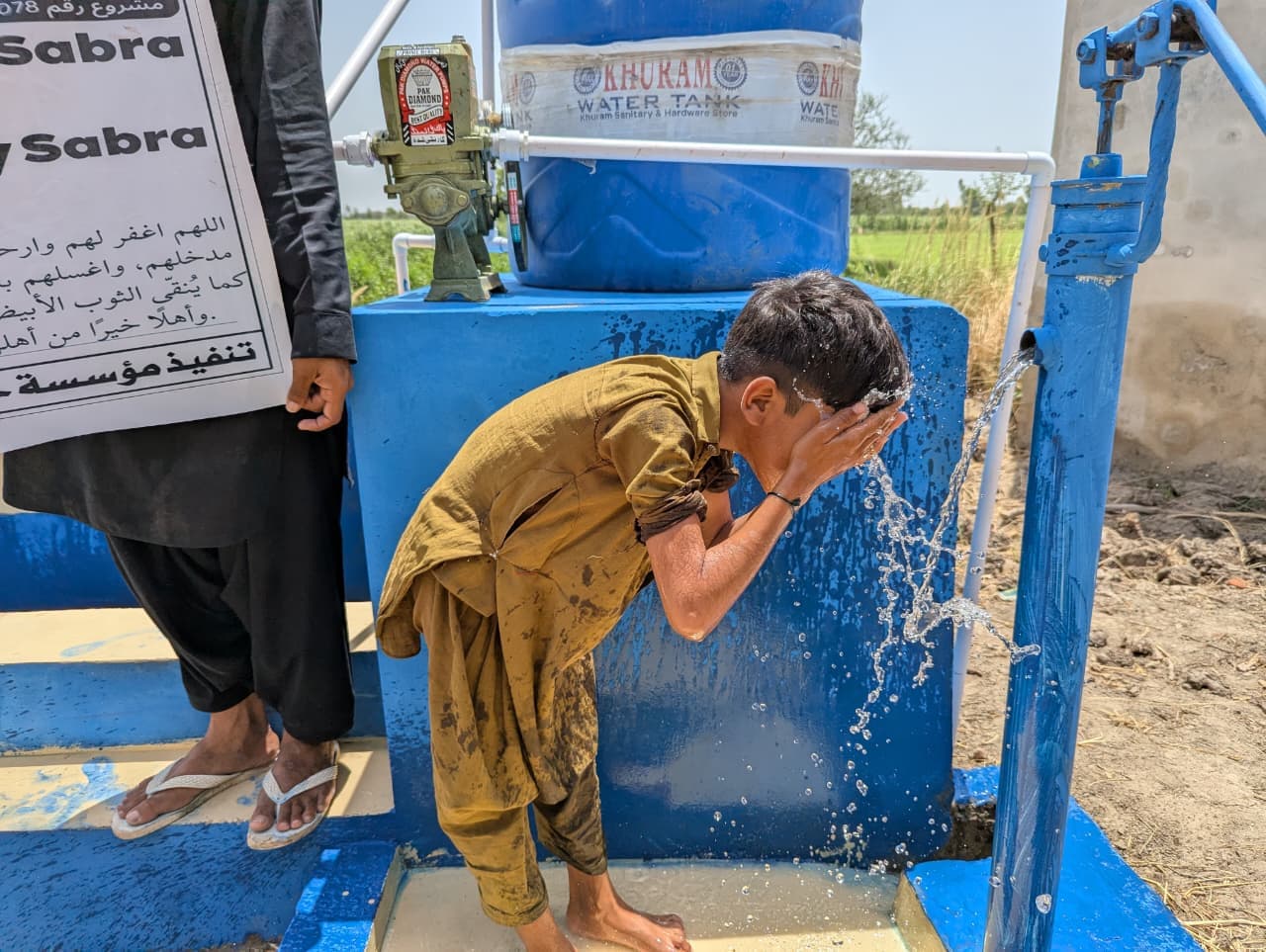
Hayat Foundation implements it through local teams within each region, not through teams sent to it. The following four points explain the practical consequences of this choice, not praise for it.
The theoretical difference is clear. Where does it appear for the first time?
2. The first impact: Who knows where the well is dug?
The resident team monitors, and the community requests
We adopt two inputs: Reports submitted by our teams working within the regions, andRequests received from residents of villages without a water source They know the team and they get there. It is not built directly on either of them, as the site undergoes an evaluation before any equipment descends into the ground.
Why can't a visiting team do this?
Because the second path does not exist at all without a resident team. The village does not communicate with someone you do not know and do not know where to find. This alone explains why some parties reach villages that do not appear on any map of interest.
The difference is in accuracy
Whoever lives in the place differentiates between a village that has never known a source, another whose source is an hour’s walk away, and a third whose pump broke down so it returns to its starting point. All three are described in the same phrase in any office report, while each requires a different response.
The site was chosen. What happens during drilling?
3. The real test: when there is no safe water
The scenario that no one mentions
The site may be excavated and there is no water, or there is unsafe water. This moment reveals the entire operating model: Is it re-drilled? Who bears that? How long does it take?
What we do
We dig again at another point within the same ocean, and we do not stop until drinkable water comes out. Your request stands, the villagers do not lose their chance, and the plaque finally bears the name you wrote.
Why is this easier for a resident team?
Because re-drilling for a visiting team means a new trip, equipment, permits and a new schedule. As for the resident team, its equipment and personnel are already in the area. The difference here is not intention but logistics.
The nature of the land determines the type
The depth of suitable water is what determines whether the project is a shallow, medium, or deep artesian well, and the differences and prices in... The cost of drilling a well is an ongoing charityThe project is fully explained in Digging a well is an ongoing charity.
The project was implemented and delivered. This is where the longer test begins.
4. After a year: Who will fix the well?
The number that everyone who pays should know
According UNICEF, the between Thirty and forty percent Water networks in rural areas of low-income countries are out of service. And remember Published review of hand pump data That About one in four hand pumps in sub-Saharan Africa are no longer working at any given momentThis is equivalent to approximately 175,000 inactive water points in 2015.
What does this mean for your project?
The possibility of a well failing is not rare, and that The right question is not “Are you going to dig?” Rather, “Who will return?”. A company whose team left does not return a pump that broke down, and the resident team can.
What our follow-up includes?
Inspect the pump and well parts, repair any defect that occurs, replace damaged parts, and restart when stopped. And details of common malfunctions in Well maintenance.
It remains for you to verify all of the above.
5. How do you check all of this while you are away?
Don't believe a description, ask for an effect
The resident team leaves a trace that can be examined: Geographic coordinates You open it to a map, before-and-after photos of the site, a video of the project in action, and a plaque with the name you requested. Detail in How are well projects documented?, and models in Documentation page.
And three questions to ask any company before paying
- Who implements the project: a team based in the area or a team deployed?
- What happens if there is no safe water?
- Who repairs the well if it breaks down after a year?
Whoever answers all three clearly deserves to continue with him. The full screening standards are in How to choose a reliable organization to drill a well in your name.
Where do we implement?
In a number of countries, including Pakistan AndIndia AndNepal AndBangladesh. The client selects the country Upon completion of his application, each month's areas are published by name in Monthly reports Like May 2026 report. And whoever wants a complete experience with its number,...The story of a client who implemented nine wells.
Why do we publish regions every month?
Because a company that actually operates in a place you can name. The party that suffices with the phrase “in one of the poor countries” either does not know where the project was implemented, or knows and does not want it to be reviewed. When the names of the regions are published month after month, any reader can compare: Is the work really expanding, or are the same names repeated without movement?
Frequently asked questions
What is the most important thing to ask a well drilling company abroad? Who is implementing on the ground: a team residing in the area or a team sent there. This determines the accuracy of the site and the speed of subsequent implementation and maintenance.
Why does it matter if the team is local? Because he knows the land and the community, he receives requests from the villages directly, and he remains in the area after delivery.
Who chooses the village in which the well is dug? Reports of the field team or the request of the villagers, then an evaluation of the site before implementation. As for the country, the client chooses it.
And if the site leaves without safe water? We drill at another point within the same ocean until potable water emerges, at no additional cost to the project owner.
How can I be sure that the well was actually carried out outside? With a file containing coordinates that you open on the map, photographic materials from the site, and a plaque with the name on it.
Do wells break down often? Published data indicate that a large portion of rural water points are down at any given moment, so follow-up is part of the project and not an additional service.
How long does implementation take? It varies according to the type of well and the nature of the land, and the details are on the page The cost of drilling a well is an ongoing charity.
Do I choose the country myself? Yes, you specify the country as you complete your application, and the point within it remains for the team to determine after the field evaluation.
Can I communicate with the implementation team directly? Communication takes place through the organization’s official channels, which relay site updates to you immediately during implementation, and then deliver the documentation file to you after completion.
Do prices vary depending on the country? The price is related to the type of well and its specifications, and details are published on the types pages.
Ask about the team before you ask about the price
Abroad well drilling company It is measured by who implements it, not by who announces it. The team that lives in the area is the one who knows where to dig, re-dig if necessary, and returns if something breaks down.
Choose your project from Well projects, or read about us at Who are we?, or Ask us Questions above three before you decide.
The well is not shipped from outside, but is dug by those who live there.