
Hayat Foundation Achievements Report for May 2026: 480 wells and 1,470 sacrifices
Hayat Foundation’s achievements in May 2026: 480 well project Capacity exceeds 28,770 people daily, and1,470 sacrifices Between 1,400 sacrifices and 70 aqeeqahs, distributed among five countries.
This is the highest month recorded in our series of reports so far, and the reason is well known: May coincided with... Eid al-Adha season. We have published it before June report AndJuly report AndAugust report.
And a principle Digging wells and watering water: ongoing charity in your name A fixed number for each month: an announced number, a detail that explains it, and an open question when something is missing.
Article summary:-
This article presents the outcome for the month of May 2026: the number of wells implemented and their division into three types in proportion, the daily carrying capacity, then the sacrifices and the reason for their increase in this month in particular, then the work areas in five countries, then the location of May among the rest of the months in the series, and finally the maintenance work that follows what was carried out previously.
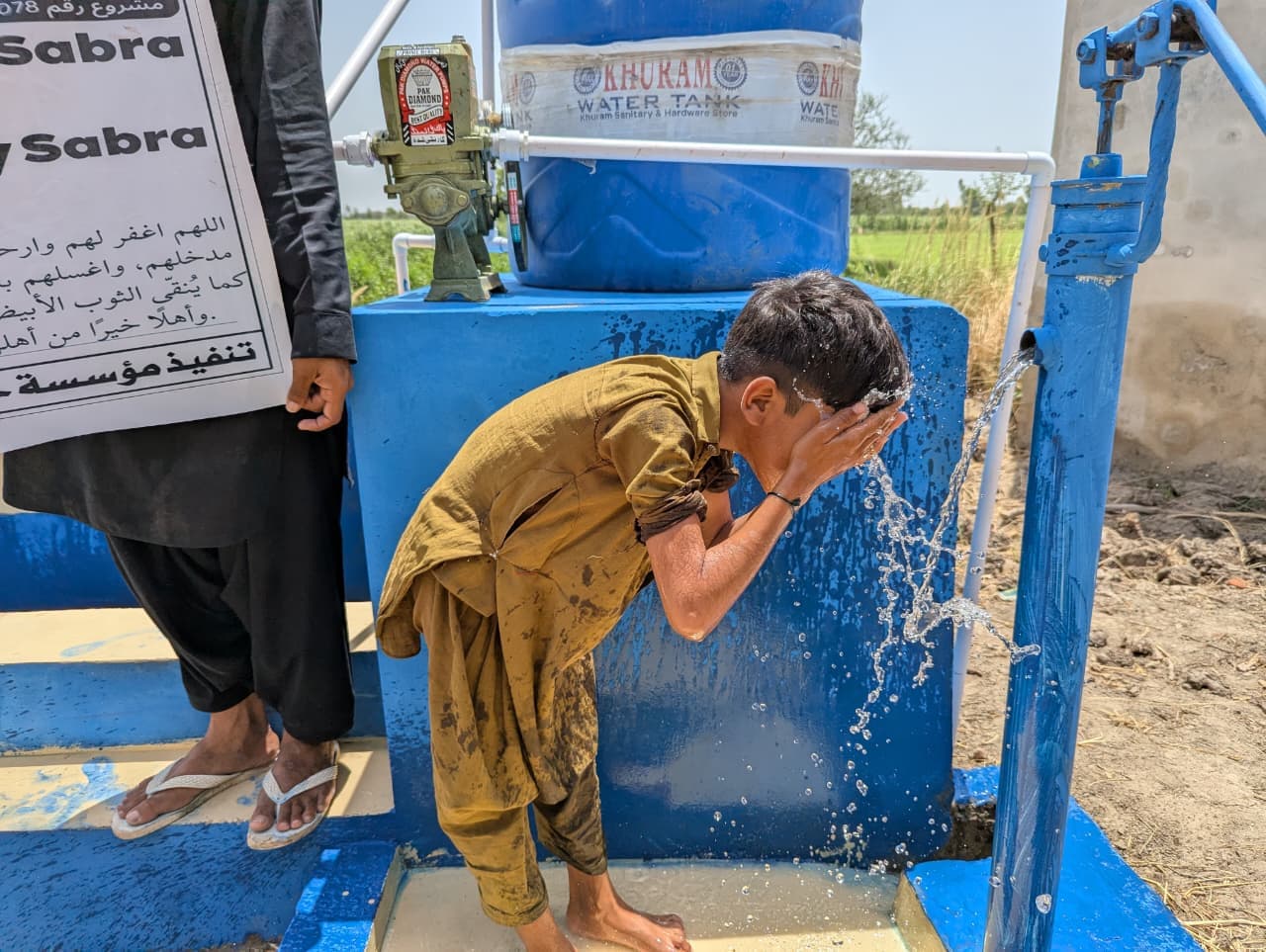
Most notable numbers: 480 wells Distributed among 322 manual shallow wells (67%), 101 medium artesian wells (21%), and 57 deep artesian wells (12%), with a daily capacity exceeding 28,770 people. And1,470 sacrifices: 1,400 sacrifices And70 AqeeqahDue to the month coinciding with Eid al-Adha.
1. May wells: 480 projects and three types
The table is as is
| Type | Number | His share | What one serves | His daily tally |
|---|---|---|---|---|
| Manual surface well | 322 | 67% | +20 people | +6,440 |
| Medium artesian well | 101 | 21% | +80 people | +8,080 |
| Deep artesian well | 57 | 12% | +250 people | +14,250 |
| Total | 480 | 100% | +28,770 |
Quick read of the table
Nearly fifty deep wells generated more than half the daily capacity: 14,250 out of 28,770. If you looked at the first column alone, you would think that the entire month was shallow wells, and if you looked at the last column alone, you would think the opposite. Therefore, we publish the complete columns, and the differences between the types and their prices are explained in The cost of drilling a well.
Who decides the type of well?
Land, not demand. The team first examines the site and determines at what depth there is safe water, then chooses the appropriate type. This is why the proportions change from one month to another without this indicating a preference for one type over another.
What does the energy number mean?
In every report, we adhere to the organization’s text: “Beneficiary numbers represent the estimated capacity of the projects, and are not a unique count of people.” Counting thirty days, the monthly capacity exceeds 860,000 uses.
That's half the picture. The other half is what made Mayo an exception.
2. 1,470 sacrifices: Why did the number increase in May?
Distribution for purpose
| Purpose | Number |
|---|---|
| Sacrifices | 1,400 |
| garnets | 70 |
| Total | 1,470 |
The reason in one sentence
May 2026 approved Eid al-Adha seasonThe sacrifice is a temporary act of worship that cannot be performed at any other time, and its beginning and end are detailed in Time to slaughter the sacrifice. This is why the number rises during the month of Eid and then returns to its normal level afterward, as you can see in June report We recorded 138 sacrifices without sacrifices.
70 Aqeeqah outside the season accounts
Aqeeqah is not seasonal at all. It is the newborn’s sacrifice and its time is linked to his birth, not to the calendar. Its provisions are in Aqeeqah guideAnd the differences between it and the sacrifice in The difference between Aqeeqah and sacrifice. The presence of 70 aqeeqahs within the month of Eid shows that the two doors operate in parallel.
What did the owners of these sacrifices receive?
Each of the 1,470 carcasses has a proof file that reaches its owner: photos from the site, a clip of the slaughter, and a clip for distribution to families with a plaque bearing the name he requested. We do not issue a paper certificate for the sacrifices or site coordinates as in well projects, because the sacrifice is a work that takes place in one day and there is no fixed facility that is recorded.
Unless stated in the month's report
We have not reached the division of the 1,400 sacrifices between sheep, goats, and cows, nor their distribution among countries. We will not appreciate a number that is not sent to us. If anyone wants to know what each type includes and how many families it is enough for, the details are below Sacrifice pricesAnd the method of implementation in Sacrifice project.
The numbers are clear. It remains to be seen where these projects land on the map.
3. Mayo map: five countries and their regions
- Pakistan: Sindh province, and the cities of Kashmore, Shikarpur and Jacobabad.
- India: The states of Bihar, Uttar Pradesh, West Bengal and Assam.
- Bangladesh: Kurigram, Gaibandha, Cox's Bazar and Noakhali districts.
- Nepal: Madhesh Region, Rautahat, Parsa and Sirha regions.
- Tanzania: Zanzibar, Bwani, and the Mtwara and Lindi regions in the south.
The stability of the map is intentional
Almost the same areas are repeated in the following months' reports, and this is not a lack of diversification but an operational choice: frequent work in a known area means teams that know the roads and local authorities, and easier follow-up of old projects when their maintenance is needed.
Why these particular areas?
Because they are villages and rural communities with limited resources, a large portion of the world's population still does not have an improved drinking water source close to home, according to World Health Organization. Implementation is carried out through teams from within each region, with the stages followed until completion.
We knew where. The question that every reader of the series asks remains: Is May truly an exceptional month?
4. Where does May fall among the rest of the months?
| month | Wells | Daily energy | sacrifices |
|---|---|---|---|
| May 2026 | 480 | +28,770 | 1,470 (Mostly sacrificial) |
| June 2026 | 216 | +13,000 | 138 |
| July 2026 | 190 | +12,030 | 83 |
The difference is understandable, not surprising
The number of wells in May is more than double the following month, and the number of carcasses is almost ten times higher. The stated reason is the season: requests intensify before and during the holiday, and everything rises with them. This also means that the May number is neither a monthly promise nor a benchmark against which normal months are measured.
Two rules for reading the table fairly
Firstly, The May slaughter figure is not directly comparable to the June and July figuresBecause the first are seasonal sacrifices and the others are sacrifices and charity. Secondly, The August number does not enter this table: August report He announces 240 projects, which include, in addition to the wells, ablutions and other equipment, so placing them in the same column with the wells is a comparison between two different things.
Why do we pay attention to this instead of abandoning it?
Because the easiest way to inflate numbers is to put them in one column without mentioning their different types. We prefer a smaller, understandable number to a larger, ambiguous number, which is the same rule that applies in all reports.
What remains is what does not appear in any month's schedule: what happens to projects after they are delivered.
5. After delivery: maintenance and follow-up
The four works
- Periodic inspection of the pump and well parts.
- Fix any bug that occurs.
- Replacement installation for any damaged part.
- Run the project again if it stops.
Why do we mention maintenance in the Enjaz report?
Because the real achievement is not the number of wells dug, but the number of them working. And she points UNICEF A significant portion of rural water supplies in low-income countries could be offline at any moment, which is exactly what monitoring is trying to prevent. An explanation of recurring malfunctions and how to deal with them is available in Well maintenanceAs for the pictures and data that the project owner receives, they are detailed in Documentation of well projects.
Frequently asked questions for the May 2026 report
How many wells will there be in May 2026? 480 wells: 322 shallow, 101 medium artesian, and 57 deep artesian.
What is the carrying capacity of these wells? It exceeds 28,770 people per day, which is an estimated project capacity, not an individual enumeration of names.
How many sacrifices were carried out in May? 1,470 sacrifices: 1,400 sacrifices and 70 aqeeqah.
Why is the number of sacrifices high in this month? Because May 2026 coincided with the season of Eid al-Adha, and the sacrifice is linked to the days of Eid, as in Time to slaughter the sacrifice.
Are there sacrifices in the rest of the months? No, outside the days of Eid the slaughter is considered an Aqeeqah or Aqeeqah A charity sacrifice, as in the June and July reports.
Where were this month's projects implemented? In five countries: Pakistan, India, Bangladesh, Nepal, Tanzania, and their regions are mentioned by name above.
Does May's number compare to other months? The number of wells is compared to the number of wells, but the sacrifices are not, because most May sacrifices are seasonal sacrifices.
What happens to the wells after they are delivered? Follow-up cycle: checking the pump, repairing the defect, replacing damaged parts, and starting it again when needed.
How do I book a project in my name? Select what you want inside Well projects Or inside Sacrifice pageAnd complete your reservation using the method that suits you Payment methods.
Your name in next month's report
Hayat Foundation’s achievements in May 2026: 480 wells with a capacity of more than 28,770 people per day, and 1,470 sacrifices, including sacrificial animals and aqeeqahs, in five countries, with a follow-up to everything that was implemented before.
Start from Well projects, or from Sacrifice pageIf you want more detail before making a decision, pleaseMessage us.
480 wells in one month, and each well is a shorter path to water.